
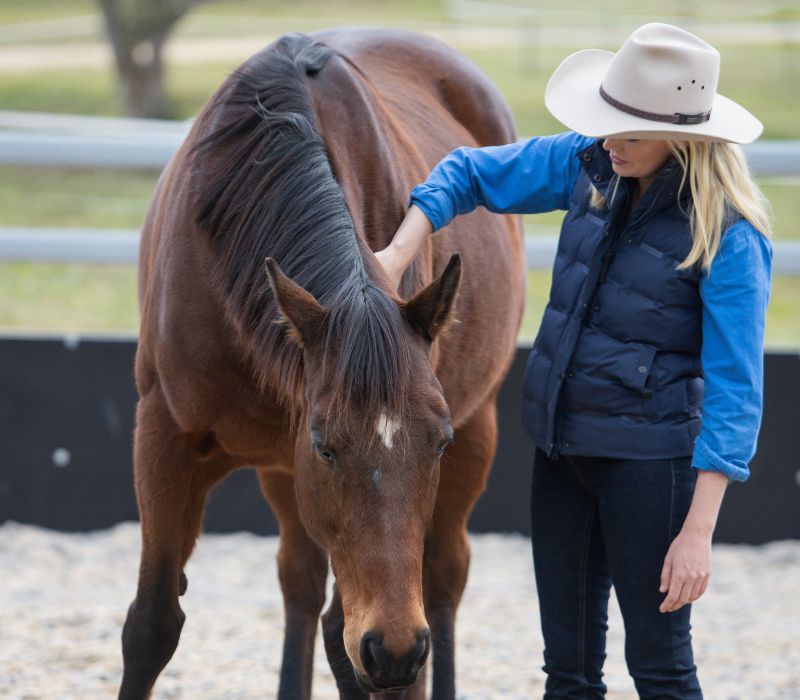
“I’ve been doing groundwork, but it’s not making any difference to my horse. In fact, he’s swishing his tail and biting when I ask him to move! Should I stop groundwork completely?” – Stacey
You hear just about everyone talk about how incredible groundwork is – that its the Holy Grail to solve your horsemanship woes… so you cross your fingers, and you start groundwork. But nothing happens.
Maybe your horse just spins in circles, does what you want and the stands there with a glazed over look in his eye. But when you try that one thing again that he’s struggling with again, hoping it would be different this time because y’know, you’ve done The Groundwork… but he transforms into a fire breathing monster again.
Or maybe your horse just flat out ignores you when you ask him to move his hindquarters and you’re left standing there, twirling a rope in the middle of an arena, all the while your horse is making you reconsider and take up a hobby like knitting instead.
Here’s the thing.
You’re so focused on what each groundwork movement looks like, you’ve forgotten to ask him how it FEELS.
Your horse’s mind has to connect to the body. otherwise he’s just doing a series of stretches and physical postures, but this doesn’t change or influence his mindset e.g anxious to calm, unmotivated to engaged, herd bound to focused on the handler etc.
By focusing on how your horse feels when he goes through an exercise, by rewarding his attempts to find the right answer you build trust. And trust is the basis for changing feelings. If you feel anxious and someone you don’t like or have a bare minimum relationship says “trust me, you’ll be fine”… how much trust do you really have? Yeah, not much.
Whereas if someone who had coached you through something either physically or emotionally, they had been through ups and downs with you and they had a history of helping you solve mini problems… when they take your hand and say “Trust me, you’ll be fine” You’re probably a whole lot more likely to actually trust them.
So how do you connect feelings AND actions?
- Slow down, really slow down and reward your horse’s thought of trying
- Your horse feels good when he is soft and responsive – look for movement that is fluid, that responds to your ‘intention’ and that is soft.
- Like a dance partner, you can predict their next steps and your body automatically joins them in the dance.
- Look for behavioural signs like a relaxed head, eyes blinking normally, responsive weight shifts with your movement and supple bodies to help you identify that your horse isn’t just ‘going through the motions’. We want a calm, willing and engaged partnership.
Back to your original question Stacey: Why is he not progressing and should you forget about groundwork?
Well, unfortunately, a lot of horses experience some pretty woeful ‘horsemanship’ and dominance/submission based groundwork. It is most likely that he has experienced this and is anticipating you to work with him in this way. His expectation is that work on the ground makes him feel pretty awful and possibly in a previous home they also physically hurt him too – all for the sake of ‘respect’. This is why the groundwork isn’t making a difference and he is getting worse – you both think you’re speaking the same language, but you’re speaking two different dialects, each telling a different story…
We need to show him (through small, repetitive interactions) that we aren’t interested in having him ‘submit’ by crossing his hindquarters over perfectly. What we are interested in, is that we can move towards his hindquarters, he feels our intention, and can start by taking one neat, clean little step over to allow us to take that space. We then want to build that and invite those hindquarters back over to us, and we can offer him that space again. That is how groundwork makes a horse feel good about himself. That is how groundwork sets up patterns of movement that are soft, kind and move fluidly within each other’s space.
- – Maddy
I show people my methods for kind, compassionate horsemanship in the subscription training library. Whether you’re looking to solve behavioural issues, starting fresh with a new horse, or you’re fed up with dominance theory or awful methods disguised as ‘horsemanship’ then click the link below to learn how you can start making a positive impact on your horse’s training and emotional state today.
Got a question? Don’t forget, you can submit your own question to askmaddy@whitfordequestrian.com for the chance to be featured in the weekly blog.


