
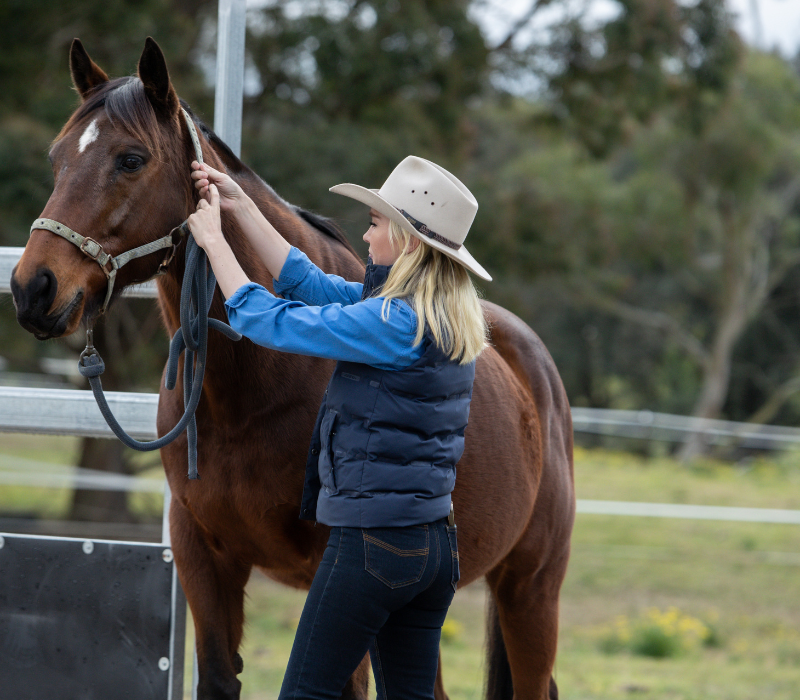
“My horse has a habit of, when I come to get him out of his pasture or stall, pinning his ears, snaking his neck and trying to bite me. I’ve been doing as best I can to respond very quietly and as little as possible but he’s started turning sideways and shoving/stepping his body into me. I’ve been looking at the ground and swirling the end of my rope till he gets out of the bubble. He responds very poorly to any type of direct/high energy response. I’m not sure how to respond in a way that benefits him and will improve this over time, as well as keep me safe. I wanted to add that he does this primarily when he is un-haltered. As I am walking up to his stall and opening the gate etc. He is much better once his halter is on (this has only been happening for about 2.5 weeks), but I don’t want to be dependent on a halter to interact with him as one of my ultimate goals for us is to do liberty work. ” – Bari
Hi Bari,
I want to start off by saying how much I commend you for keeping level headed and calm during this behaviour. This is not an easy thing to do. When we experience dangerous, scary, aggressive or defensive behaviour from anyone, human or animal, it naturally triggers our own fight or flight response. Staying calm and responding quietly is key, which is exactly what you have been and should continue to do! Fantastic!
The first thing that springs to mind with this behaviour is WHY. Why is your horse acting so defensively when you go to catch them, what is triggering this behaviour?
As with all things with our horses, we don’t want to ONLY address the problem behaviour, we want to address the CAUSE. Think of the behaviour like an iceberg. The behaviour you and I see and experience is the part of the iceberg that sticks up out of the water. However, the cause, or the reason why the behaviour is present is often a much larger issue and is the part of the iceberg that is submerged and under the water.
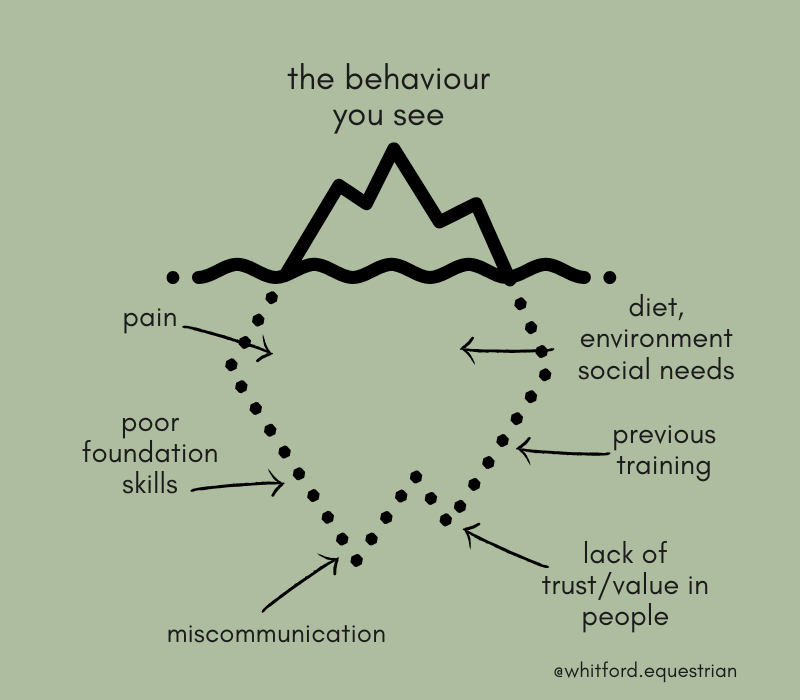
The good news is that you have successfully identified early on that your horse is not comfortable with the process of being caught and worked with. The great news is that because you’ve identified this early on, and not punished him for it, he does not need to escalate his behaviour in order to be heard!
So let’s help him feel change his behaviour by helping him change his view about interactions with people.
In order to do this we need to think carefully about his lifestyle and interactions recently.
- Has anything significant happened for him in the last two weeks? e.g change in facilities, paddock mates, injury etc?
- What kind of work is happening once he is caught?
- When he is biting and doesn’t have the halter on, are there other horses close, is there food around?
The fact that is is only happening when he doesn’t have his halter on tells me this: He probably ‘submits’ once that halter goes on because he knows there is no alternative, so before it get’s put on, he uses the opportunity to make sure he is being heard. This is unlikely to be something you’ve done, and instead something in his past. Don’t stress about it, we’re here to help him, together.
This is what I would do:
Whenever he tries to bite or snakes his head towards you, step just of the way until you are ‘safe’. The moment he softens and looks to relax, step backwards. This is critical. Essentially, anytime he shows relaxation around you in a way he previously felt anxious, you want to reward the calm by providing more of it: i.e more space between you.
Then, stand and pause for a moment. He will either ignore you and wander off, or he might get curious and think, ‘Hey, this is cool” and follow you. If he follows, then keep stepping backwards, slowly and calmly for about 2-3 steps and let him come to you. Hold that a few moments and then repeat another few times. Once he seems more relaxed around you, then leave. And I mean, walk out of the paddock, stall, yard – wherever you are and do something else for 5 minutes. Then use the same approach and then once he’s engaging with you, calmly halter him.
But what if he walks away when you initially step away? That’s cool too, don’t stress. Gently follow him at a safe distance, a few paces slower than he is. You don’t want the feeling of charging after him, you want it to feel like drifting, of “Oh hey, that’s cool, we both ended up here too.” Try not to close that distance between you at all. Whenever he looks in your direction, stops, or shifts his weight towards you, withdraw slowly, a step or two from the interaction. This will draw him to you over time.
Don’t stress, this may take a few sessions, but by working on choice and positioning yourself as someone who does rush and who doesn’t punish or force behaviour is a huge game changer.
I have a free video on the website on how to catch a horse who doesn’t see the value in interactions. This might help you more clearly see what I’m describing above.
What else can you do?
Evaluate the rest of your training
- Is he being treated with the same kind, consistent handling in ALL other areas of his work? e.g. is there someone else interacting or riding or dealing with him who is sending him mixed messages by being more forceful and ‘traditional’? This can cause confusion which leads to frustration which can lead to aggression/anxiety.
I hope this helps give you some clearer goals, activities to work on with him. Please keep me updated and let me know how it all goes.
- – Maddy
I show people my methods for kind, compassionate horsemanship in the subscription training library. Whether you’re looking to solve behavioural issues, starting fresh with a new horse, or you’re fed up with dominance theory or awful methods disguised as ‘horsemanship’ then click the link below to learn how you can start making a positive impact on your horse’s training and emotional state today.
Got a question? Don’t forget, you can submit your own question to askmaddy@whitfordequestrian.com for the chance to be featured in the weekly blog.


