
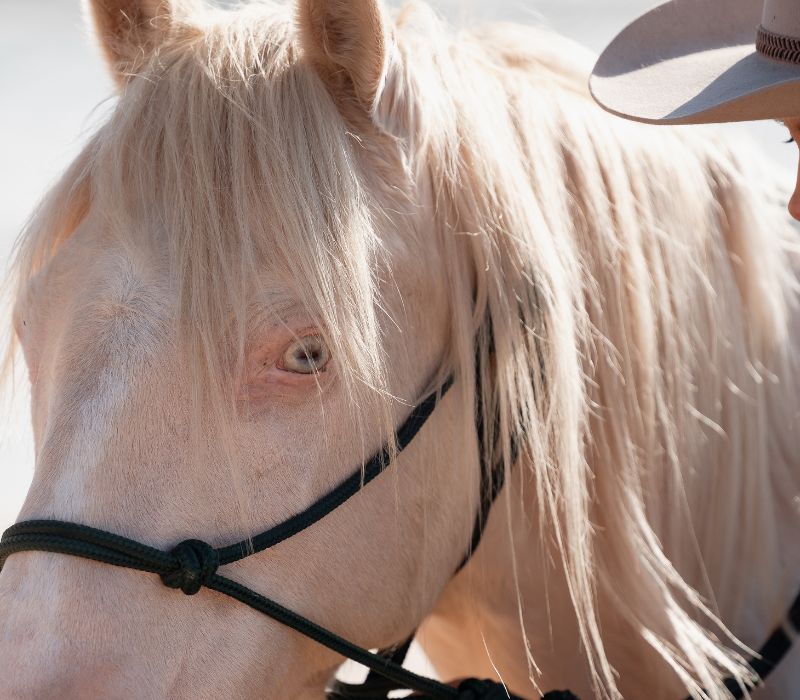
“In the past few weeks, my horse Roger, has started giving resistance to leading (thought we had overcome that) and he doesn’t really want to do things with me except go for hand walks where is has possibility of good grass. He was always a good worker but has started to even resist lunging. He seems really bored with everything I suggest (obstacles in dry lot, just sitting in pasture with him). He is healthy and on supplements for joint and gut health. What can I do to help Roger find his zest for life (with me)? I can tell he is bored with me and I frankly am dancing as fast as I can…I tried to spend at least 30-60 minutes a day doing something (or nothing) with him. It is coming to end of season when weather will make it harder/shorter days/colder weather. ” – Kim
Hi Kim,
It sounds like you are taking fantastic care of your beautiful Roger – and I understand the frustrations, we go to great lengths to care for and provide for our horses, and sometimes, it feels like the horse’s behaviour actually deteriorates rather than improving when we start to provide all their needs.
But, this is actually normal. For the last three years you’ve been rewiring how he views daily care, feed, and work. So, you have effectively brought him out of ‘survival’ mode. Survival mode in horses is often seen in a variety of different ways but think of; extreme behaviour, aggression, fear, shutting down etc.
Now, he has become accustomed to your excellent level of care, he is quite disinterested in having things change.
Being an older horse, it can be hard to motivate them to find enjoyment in changes of routine. Remember, he’s been around people for a while and more than likely he’s encountered someone who has let him down at some point. But, now he’s landed in horsey heaven where you listen, you adjust your goals to accommodate his body and wishes – now that his needs are met, he probably feels like he doesn’t need anything else in his life.
Think of it in 3 different levels.
Level 1: survival mode, horses are just ‘in it for themselves’
Level 2: basic needs are met, he is content, he enjoys your company, but doesn’t care for a change to this new, lovely lifestyle.
Level 3: he is mentally stimulated and challenged, creating more interest and variety in his life, no longer just ‘existing’ but thriving and engaging in his environment and relationship with you.
I would suggest he is quite happy at Level 2 with you, and the jump from Level 2 – Level 3 can be tricky to navigate.
Just like with any relationship, whether it is human or animal, we need to provide safe challenges. Sometimes we don’t want to be challenged out of our comfort zone, we want to stay where we are. But after having had our experiences broadened, we find our lives are far more enriched. i.e. Roger doesn’t (and can’t because he’s a horse) know that there is actually another life that exists with you that is even better than this current version.
And all of this is important to understand – the why of Roger’s disinterest, but we also need practical support and steps forward too.
How to move from Level 2 to Level 3?
Sometimes we need to be pushed (gently, kindly and with support) even when we say ‘no’. As a child, I didn’t particularly like eating my vegetables, but my mum, made accommodations to help make it more enjoyable. The thing is, my mum knew better than me. She knew I couldn’t exist on bread and pasta at age 8, and even though as an obstinate 8 year old, I said no – repeatedly. She still offered vegetables, provided different sauces, didn’t make a fuss, and gradually I found that trying new things wasn’t so bad.
What on earth does vegetable-hating-8-year-old Maddy have to with you and your horse, Roger?
Well, Roger doesn’t understand what he is missing out on. It is our job to not let our horses dictate a stagnant existence, but to gently, kindly push them out of their comfort zone.
What would I do with a horse like Roger?
I would focus on providing change to his life in a way that is stimulating but within a comfort zone. You mentioned you’re having difficulties encouraging him to lead away from the pasture now. I would do some groundwork with him in his pasture, or just outside of it. This sets up a better relationship based on ‘micro wins’ (your horse can feel good about being able to work with you) in an environment where he feels more secure. This would be like my mum offering me vegetables, but allowing me to put some sauce or gravy on it to help with the taste or texture. You can still work on things that challenge him, but you’re not demanding complete change in behaviour and environment.
He’s struggling to lunge? Then don’t lunge – for now. Focus on instead of ‘lunging’ as an activity, break it down to small, micro wins. Ask him to move his shoulders out, ask him to walk a few steps before you stop again. I promise, the slower you go, and break it down so he can feel really successful, the more quickly he will willingly engage and start to offer different behaviours.
As you’re a member of the subscription Library, these videos are going to be the most helpful for you:
- Basic Handling: Horse Refusing to Lead
These two videos will show you how to help your horse lead when you actually need him to go in a certain direction e.g. for the farrier or a vet visit
- Lunging: Shut Down Horse
This is a 4-part series where I show you how I help a horse to open up emotionally. She is a lovely horse, but doesn’t value working with people much. She works quietly, but doesn’t want to interact. I show you how to establish connection, and how to focus in on the ‘micro wins’ with her. It’s less about the feet moving whilst lunging and more about her mental state. This will help you connect with your boy, without overtaxing him physically.
Maddy


