

We can’t only focus on nutrition when helping transform horses. We need to consider how much the mental state is reflected in the horse’s body.
Everyone loves a good glow up but let’s talk about what it should look like and what we can do about it.
Let’s use two of my personal horses to showcase the importance of a good whole horse transformation.
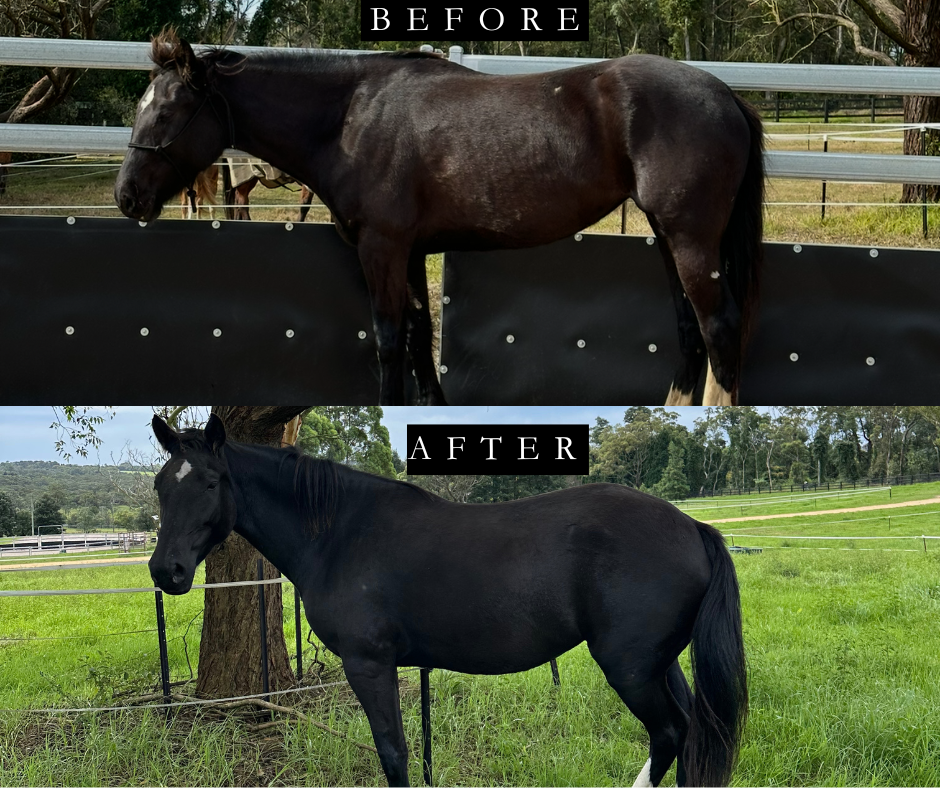
Before we go any further though, the age, breed, season and emotional state of each horse is important to factor in. The smaller black mare in the first photo is a 3.5 year old Clydie X WB during her first few weeks at our place compared with 8 months later in a summer coat. She is also standing differently (I can’t explain how hard it was to snap a photo of Dakota these days without her all up in my face investigating, curious and confident haha.)
The second mare is a more mature warmblood mare (12 years old) who was coming out of rigorous training and a lean winter when the first photo was taken. Her second photo was taken in full summer coat, approximately 7 months later, settled in her new life with us.
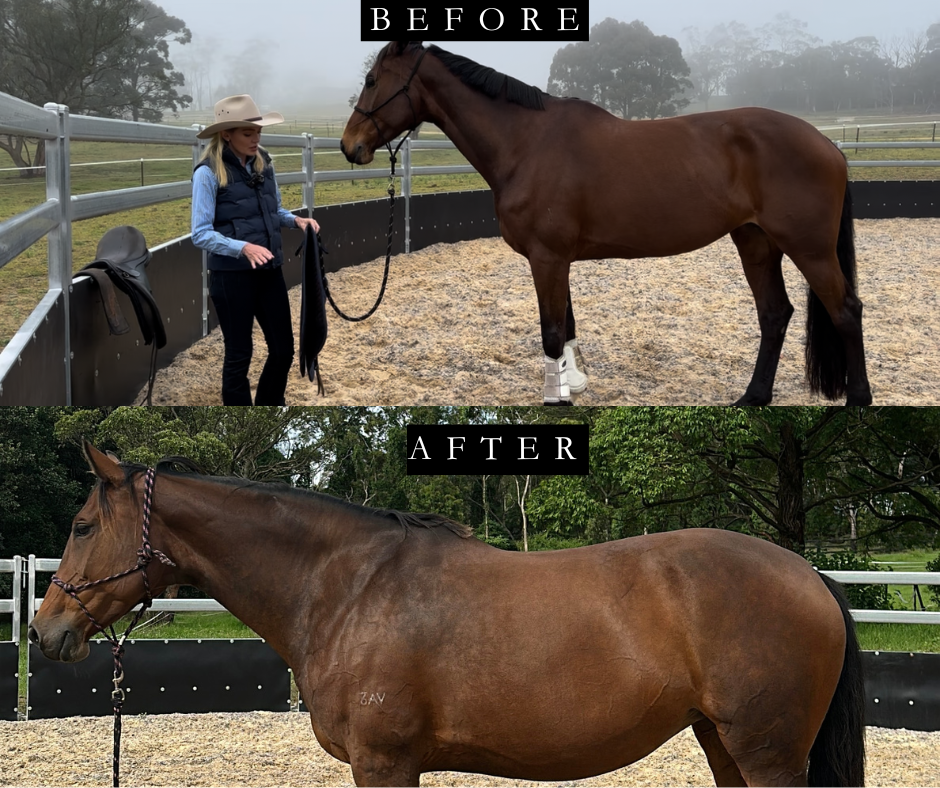
However, both horses have made significant changes in both their mental and physical states. Are they ‘finished’ yet? No, far from it. But they have made changes and I think it’s important to reflect on this process so far.
Firstly, a good transformation should take into account the whole horse. We need to prioritise mental rehabilitation just as much as physical rehabilitation. Remember, what we think care and love for our horses looks and feels like (saddle pads, matching sets, and lots of carrots), isn’t necessarily what our horses always want.
Their list is relatively simple: freedom to move, other horses to socialise with and quality feed and forage. I’m going to add another one here: Consistently effective and kind handling and training.
If we address their basic environmental needs, and we can help the horses feel successful, engaged and connected in their work with us, then we are going to get a whole horse transformation.
If our horses carry mental tension, no amount of extra feeding is going to allow muscles to truly move correctly and to develop. Tension, anxiety and stress in the training, not only causes the obvious physical pain in horses, but it also causes tension and rigidity in the horse’s movement. We cannot create a strong, supple horse with correct rhythm and tempo if they are anxious, fearful of correction or worried about the rider/handler. While this might seem obvious, how many people do you hear who are spending a small fortune on extra feeds, and high calorie diets in a desperate attempt to ‘put weight; and false topline on a horse who is so riddled with anxiety, his mind and body are suffering?
So what does kind and effective training actually look like?
- Once the mind is relaxed, the body can let go too. Once the body has let go, and rebuilt its natural strength, the refinement and sophistication of training can begin.
- We want to teach the horse that they do not need to fear correction. My favourite expression when teaching people and helping their horses is: “not like that, like this”. No anger, no frustration, no aggression and no punishment. The correction is simply a move towards what I want, there is no need to punish the undesired or accidental behaviour.
- We want to teach our horses to move without restriction and to find confidence in their bodies. This means stripping the training back to basics, focusing on a few key areas: engaged and willing forwards movement, stretching the whole outline of the horse, and encouraging the horse to move in ways which encourage mental relaxation.
I promise you, that revisiting the basics and prioritising your horse’s emotional state throughout training will always be beneficial and the results will be seen in the physical shift of your horse too.
Maddy
I show people my methods for kind, compassionate horsemanship in the subscription training library. Whether you’re looking to solve behavioural issues, starting fresh with a new horse, or you’re fed up with dominance theory or awful methods disguised as ‘horsemanship’ then click the link below to learn how you can start making a positive impact on your horse’s training and emotional state today.
Got a question? Don’t forget, you can submit your own question to askmaddy@whitfordequestrian.com for the chance to be featured in the weekly blog.


