
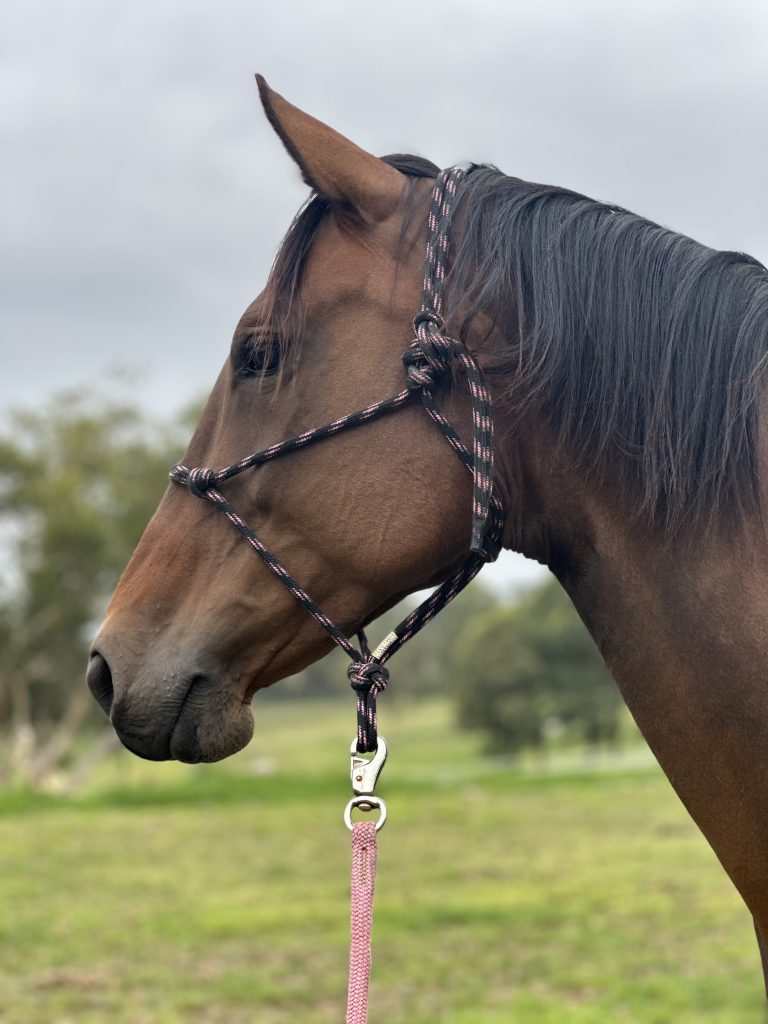
Teaching a horse to tie up is an important life skill.
Checking that they do not need to be tied is even more important.
I like my horses to have opinions. I want feedback when I groom them, tack them up, pick out their feet, or ask them to stand for the farrier. That feedback tells me how they are feeling in their body and their mind. The only way a horse can offer honest feedback is if they are free to leave.
This doesn’t mean I never tie my horses, of course I will, what I mean is that I frequently leave them safely untied to make sure they are still choosing to stay with me during tasks e.g. grooming, hoof care or saddling.
Stillness is a mental state, not a physical one
One of the biggest differences in how I teach horses to stand still is that I do not focus on the feet.
I focus on the mind.
I genuinely do not care if a horse shifts their weight, moves a foot, or adjusts their stance. The feet are simply a reflection of what the mind is doing. A calm, regulated mind is comfortable standing still. An anxious or unsafe mind will fidget, pace, lean, or brace.
We see this in people all the time. When we are nervous, we tap our foot, wriggle our fingers, clench our hands, or struggle to stay still. Horses are no different.
When a horse feels unsafe, no amount of tying, holding, forcing, or insisting will create true stillness. It might create immobility, but immobility and calm are not the same thing.
True stillness comes from safety.
Horses are designed to move first, think later
Horses are prey animals. Movement is their primary coping strategy. Running away is how they survive.
Because of this, I find it far more effective to teach self regulation through controlled movement, rather than trying to remove movement altogether. When a horse knows they are allowed to move, they are far more capable of choosing stillness.
This is where choice becomes powerful.
If a horse knows they can leave, and they choose to stay, that tells me everything I need to know about their emotional state.
I do not actively teach tying
I do not run specific sessions where I teach a horse to tie up and stand immobile. Tying becomes easy when a horse feels comfortable in their body, understands how to down regulate, and trusts the process they are in.
That said, tying still has a place.
If I need to step away briefly to refill a hay bag or grab equipment, I will absolutely tie my horse so they do not put themselves in an unsafe situation. That is basic management.
But if I am standing right next to my horse, grooming or tacking up, I always give them the option to leave.
How I build stillness through choice
Before most sessions, I give my horses access to hay. This helps layer a positive experience with the grooming and tacking up area, but I am intentional about how I do it.
I do not always bring the hay immediately.
Sometimes I will start grooming, do a few small tasks, and then go and get the hay. This prevents anticipation from turning into dependency. I want my horses to be adaptable and flexible, not rigid or anxious if a routine changes.
Structure matters. So does freedom.
One of the most effective tools I use is purposeful breaks.
If a horse is trying hard to stand still but starts to struggle, I do not correct them. I move them.
We might walk one or two quiet circles together, reconnect, and then return to the same spot. This teaches the horse that movement is allowed, regulated, and temporary. Stillness becomes something they return to, not something imposed on them.
Over time, the need to leave reduces because the horse feels heard.
Why coercion works, but does not help
Tying a horse tightly to a post for hours, hitting them, or forcing them to stand still does “work” in the sense that the horse eventually gives up.
They learn that resistance is pointless.
That is not the same as learning to feel safe.
None of my training relies on coercion. I am not interested in compliance that comes from shutdown. I am interested in partnership that comes from understanding and trustWhen a horse stands quietly without being tied, they are not behaving.
They are regulated.
And that is the difference that lasts.
If you want a partnership where your horse feels safe to be honest with you, this is where it starts. Join the Video Library now and start learning a different way.

